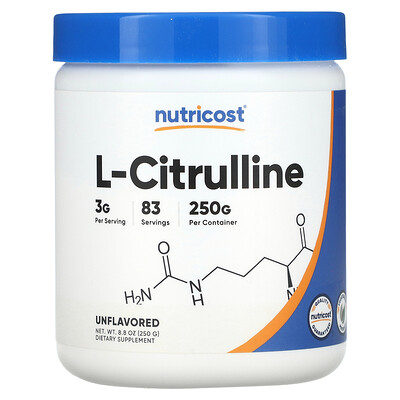
Nutricost L-Citrulline: Benefits and Usage
Name and Basic Overview
Nutricost L-Citrulline is a dietary supplement providing 3 grams of L-Citrulline per serving. L-Citrulline is a naturally occurring amino acid found in foods like watermelon and is also synthesized in the body. It is commonly sought for its potential benefits in enhancing exercise performance, improving cardiovascular health, and supporting muscle recovery.
Historical Background / Traditional Use
L-Citrulline was first isolated from watermelon, which is reflected in its name derived from "Citrullus," the Latin word for watermelon. Traditionally, it wasn't used in ancient medicine, but its role in the urea cycle and nitric oxide production has been recognized in modern nutritional science.
Composition and Active Components
The primary component of this supplement is L-Citrulline, an amino acid that plays a crucial role in the urea cycle, helping to remove ammonia from the body. L-Citrulline is converted into L-arginine in the kidneys, which then increases nitric oxide production, a compound that helps to relax blood vessels and improve blood flow.
Research and Evidence Base
Clinical trials have shown that L-Citrulline supplementation can enhance exercise performance by reducing muscle fatigue and improving endurance. A study published in the "Journal of Strength and Conditioning Research" found that L-Citrulline supplementation improved athletic performance in high-intensity exercise. Research also suggests potential cardiovascular benefits, as increased nitric oxide production can lead to improved blood vessel function and lower blood pressure. A meta-analysis in the "British Journal of Nutrition" highlighted its role in improving endothelial function. While evidence supports its use for exercise and cardiovascular health, more research is needed to fully understand its long-term effects and optimal dosing strategies. Current findings are promising but should be considered preliminary until further studies are conducted.
Potential Health Benefits
- Supports Athletic Performance: L-Citrulline is often marketed for its potential to enhance exercise performance by increasing nitric oxide production, which may improve blood flow and reduce muscle fatigue.
- May Aid in Muscle Recovery: Some studies suggest that L-Citrulline can help reduce muscle soreness and improve recovery after intense physical activity.
- Potential Cardiovascular Benefits: By promoting better blood flow, L-Citrulline might support cardiovascular health, although more research is needed to confirm these effects.
- May Assist in Erectile Dysfunction: Preliminary research indicates that L-Citrulline could help improve symptoms of mild erectile dysfunction by enhancing blood flow.
Safety, Side Effects, and Precautions
- Gastrointestinal Upset: Some users may experience mild gastrointestinal issues, such as nausea or diarrhea, especially at higher doses.
- Allergic Reactions: Although rare, individuals with specific allergies should consult a healthcare provider before use.
- Pregnant and Nursing Women: There is limited research on the safety of L-Citrulline for pregnant or nursing women, so it is advisable to consult a healthcare professional.
- Children and Adolescents: The safety and efficacy of L-Citrulline in children and adolescents have not been well-studied, so caution is advised.
Summary and Takeaway
Main Benefits: May enhance athletic performance, support muscle recovery, and potentially benefit cardiovascular health.
Caveats: Limited research on long-term effects and specific populations such as pregnant women and children.
Potential Risks: Mild gastrointestinal issues; consult a healthcare provider if you have specific health concerns.
Worth Trying?: L-Citrulline could be beneficial for athletes or individuals looking to improve exercise performance and recovery. However, more research is needed to fully understand its benefits and safety profile.
Rating Among Supplements: 7/10. L-Citrulline is a popular supplement with promising benefits, but its effects can vary among individuals.
Rating Based on Research: 6/10. While there is some research supporting its benefits, more comprehensive studies are needed to confirm its efficacy and safety across different populations.

Wellmate AI
Your smart AI assistant for supplements and wellness. Trained on scientific research, it provides personalized recommendations based on your intake, health data, and global standards (WHO, FDA). Chat with AI, track supplements, and get expert-backed insights—all in one app. Download Wellmate