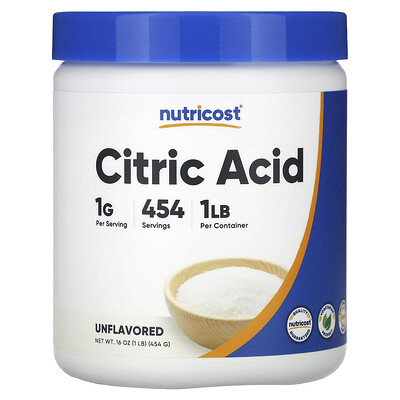
Nutricost Citric Acid: Uses and Benefits
Name and Basic Overview
Nutricost Citric Acid is a versatile, unflavored dietary supplement primarily used as a food-safe preservative and additive. It is often utilized in cooking, canning, and drying foods, as well as in beauty routines and health supplementation.
Citric acid is naturally found in citrus fruits like lemons and limes, but it is also produced synthetically for commercial use. People commonly seek citric acid for its preservative qualities, its ability to enhance flavor, and its role in various household and personal care applications.
Historical Background / Traditional Use
Citric acid was first isolated from lemon juice by the Swedish chemist Carl Wilhelm Scheele in 1784. Historically, it has been used in food preservation and flavoring. While not traditionally used in medicine, citric acid has been a staple in food processing and preservation for centuries.
Composition and Active Components
The primary component of Nutricost Citric Acid is citric acid itself, a weak organic acid with the chemical formula C6H8O7. Citric acid works in the body by participating in the citric acid cycle (Krebs cycle), a key metabolic pathway that provides energy in the form of ATP. It also acts as an antioxidant and can help in mineral absorption.
Research and Evidence Base
Citric acid is well-studied for its role in food preservation and flavor enhancement. It is recognized as safe by the FDA and is widely used in the food industry. Research indicates that citric acid can enhance the bioavailability of minerals like calcium and magnesium, potentially aiding in their absorption. While there is robust evidence supporting its use in food applications, its health benefits as a supplement are less conclusive and require further research to establish any direct health claims.
Potential Health Benefits
Citric acid is commonly marketed for its role in enhancing flavor and preserving food, which can be beneficial for home cooking and food storage. It is often used in beauty routines for its potential exfoliating properties, helping to remove dead skin cells and promote skin renewal. Some claims suggest citric acid may aid in mineral absorption, particularly calcium, although more research is needed to confirm this benefit. It is also used in cleaning products due to its ability to break down stains and mineral deposits.
Safety, Side Effects, and Precautions
Citric acid is generally recognized as safe (GRAS) when used in food and beverages. However, excessive consumption can lead to gastrointestinal upset, such as stomach pain or diarrhea. Individuals with a history of acid reflux or sensitive stomachs may experience discomfort with high intake. It is important to avoid direct contact with eyes and open wounds, as citric acid can cause irritation. Pregnant women, children, and those with specific allergies should consult a healthcare provider before using citric acid as a supplement or in large quantities.
Summary and Takeaway
Main Benefits: Versatile use in cooking, preserving, and beauty routines; potential aid in mineral absorption.
Caveats: Potential for gastrointestinal upset with excessive use; caution for those with acid sensitivity.
Potential Risks: Irritation if in contact with eyes or wounds; consult healthcare provider for specific health conditions.
Worth Trying: Suitable for those looking for a natural preservative or beauty routine ingredient, but not necessary for everyone.
Rating Among Supplements: 6/10 - While useful, its benefits as a dietary supplement are limited compared to other nutrients.
Rating Based on Research: 7/10 - Well-studied for its use in food preservation and safety, but less so for health benefits beyond these applications.

Wellmate AI
Your smart AI assistant for supplements and wellness. Trained on scientific research, it provides personalized recommendations based on your intake, health data, and global standards (WHO, FDA). Chat with AI, track supplements, and get expert-backed insights—all in one app. Download Wellmate